Choosing the Best China Vacuum Sealing Machine Manufacturer requires more than comparing prices or browsing polished product catalogs. A dependable supplier should demonstrate manufacturing experience, clear technical knowledge, and consistent quality control. Buyers should examine sealing performance, pump capacity, material compatibility, and expected daily output. Small details matter. A clean seal bar, stable temperature control, and simple maintenance can prevent costly packaging failures.
Practical evaluation should include factory audits, sample testing, and direct communication with engineers. Ask the manufacturer to test your actual products, pouch sizes, and packaging materials. Watch the machine complete repeated cycles. Check whether the seal remains even after handling, cooling, and storage. Request documentation for electrical safety, food-contact materials, and relevant quality systems where applicable. These records do not replace real testing, but they improve confidence in the supplier’s reliability.
After-sales support deserves equal attention. Spare parts availability, operator training, response time, and warranty terms often determine the machine’s long-term value. A trustworthy China manufacturer should explain limitations honestly, rather than promise perfect results for every application. No supplier is flawless. That matters.
Some factories may offer impressive customization but lack mature service systems. Others may provide excellent support while charging more. The best choice depends on transparent evidence, not assumptions. A careful buyer should compare trial results, production records, references, and total operating costs. With this balanced approach, the right Vacuum Sealing Machine can protect product quality, reduce waste, and support stable packaging operations.
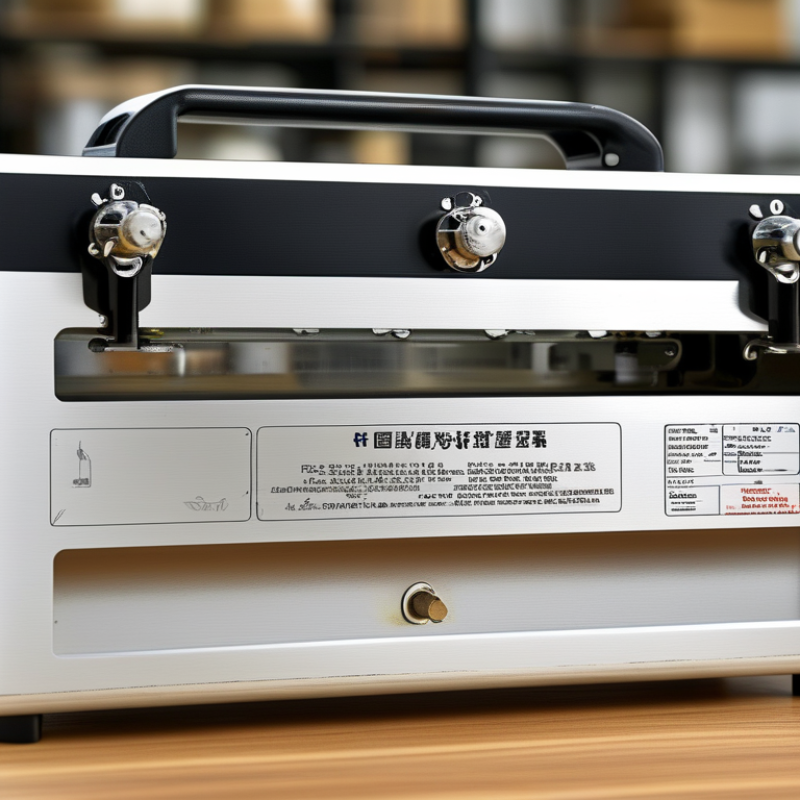
A reliable China vacuum sealing machine manufacturer proves performance beyond a polished showroom. Grand View Research valued the global vacuum packaging market at approximately USD 29.19 billion in 2023. Its report projects continued growth through 2030. That demand raises the cost of weak equipment. Buyers should inspect sealing temperature control, pump stability, chamber materials, and electrical safety documentation.
Factory experience matters. Ask for test records using your actual pouch film, product size, and moisture level. A dependable manufacturer can show repeatable seal strength, vacuum time, leakage rates, and maintenance intervals. Short videos are not enough. Request sample runs and inspect the seals after transport simulation. Small details matter. A loose lid gasket can waste material and production hours.
Food protection also gives this decision wider importance. The FAO’s State of Food and Agriculture 2024 reports that 13.2% of food is lost before retail globally. Vacuum packaging cannot solve every cause, but stable sealing may help reduce exposure to air and handling damage. Reliable suppliers should explain limits clearly, not promise unrealistic shelf-life gains. Their quality system should include incoming inspection, batch traceability, calibration records, and spare-parts support. No factory is perfect. I would still question unclear test methods, inconsistent documentation, and pressure to approve a machine before practical trials.
Reliable vacuum sealing machines begin with a clear production requirement. Manufacturers study bag thickness, product shape, moisture, temperature, and daily cycle volume. These details determine chamber size, pump capacity, sealing width, and control logic.
A capable Chinese manufacturer usually builds the frame from corrosion-resistant stainless steel. Food-contact surfaces need smooth welds and easy cleaning. Engineers select pumps that remove air steadily without crushing delicate products. They also match sealing wires to film thickness and heat sensitivity. Digital sensors monitor pressure, temperature, and sealing time. A failed sensor can create weak seals or unnecessary waste.
Testing happens under realistic conditions. Technicians run wet products, uneven bags, repeated cycles, and low-temperature starts. They inspect seal strength manually and with measured pressure tests. They also check electrical safety, emergency stops, and maintenance access. Small details matter, such as a removable sealing bar or a drain positioned below the chamber.
No design is flawless. Early prototypes may seal well but clean poorly. A pump can perform efficiently in the workshop and struggle during continuous operation. Reliable manufacturers record these failures, adjust the structure, and test again. Buyers should request test samples, maintenance instructions, spare-part information, and clear performance data. A transparent production process often reveals more than polished specifications.
Best China Vacuum Sealing Machine Manufacturer?
When comparing Chinese vacuum sealing machine manufacturers, start with measurable performance, not showroom appearance. Check the vacuum level, sealing temperature, cycle time, and seal width. A machine that reaches strong vacuum quickly can reduce product waste during busy production hours. Ask for test results using your actual bag material and product size. Clear records are more useful than general claims.
Construction details reveal manufacturing experience. Inspect the chamber, lid hinge, heating wire, gasket, and control panel. Stainless steel surfaces should be smooth, with no sharp weld edges or difficult corners. Confirm whether replacement gaskets, heating elements, and pumps are readily available. A low purchase price may become expensive when small parts take weeks to arrive. I once valued speed over service support. That decision caused avoidable downtime.
Reliable manufacturers should provide sample testing, operating instructions, electrical specifications, and inspection documents. Request several machines from the same production batch if consistency matters. Listen to the pump during repeated cycles; unusual noise can indicate weak assembly or poor maintenance. Ask how technicians handle temperature drift and uneven sealing. Some suppliers answer confidently but offer little evidence. That deserves careful questioning. Factory audits, customer references, and a written warranty can strengthen trust, though none replaces hands-on testing.
Best China Vacuum Sealing Machine Manufacturer?
How to Evaluate Quality, Certifications, and Production Capabilities
When evaluating a vacuum sealing machine manufacturer in China, inspect more than product photos. A polished sample is not enough. Ask for test records covering sealing strength, vacuum pressure, heating temperature, and cycle consistency. During a factory visit, examine welding areas, electrical assembly, spare-part storage, and final inspection stations. Workers should follow written procedures, not memory alone.
Certification claims need careful verification. Request current ISO 9001 records, electrical safety reports, EMC testing, and applicable food-contact material documents. Check the certificate holder, model number, testing laboratory, and expiration date. These details matter. A certificate for one machine may not cover another model. For export projects, confirm whether materials and plugs match the destination market’s requirements.
Production capability also deserves practical testing. Ask about monthly capacity, critical component suppliers, traceability, and quality-control sampling. Order a pilot batch and measure sealing performance after repeated cycles. Test different bag thicknesses, because weak machines often perform well only with ideal materials. One uncomfortable truth remains: a factory audit captures one day. Production can change later. Keep approval samples, inspection standards, and corrective-action records. Even experienced buyers can miss small weaknesses before shipment.
| Evaluation Dimension | Recommended Benchmark | Evidence to Request | Why It Matters | Assessment |
|---|---|---|---|---|
| Product Application | The machine should match the intended use, such as household food packaging, retail products, commercial kitchens, or industrial packaging. | Application specification, compatible bag materials, sample-packaging test, and recommended operating conditions. | A machine designed for the wrong workload or bag type may deliver inconsistent sealing and premature component wear. | Essential |
| Vacuum Performance | Published vacuum level, pump capacity, and cycle time should be clearly stated and verified using the same test conditions. | Technical datasheet, calibrated vacuum-gauge records, cycle-time test, and a demonstration using the buyer’s packaging format. | Vacuum performance affects oxygen reduction, package appearance, storage protection, and production efficiency. | High priority |
| Seal Quality | Uniform seal width, stable sealing temperature, repeatable sealing time, and no visible wrinkles, channels, burns, or leaks. | Seal-strength test results, leak-test procedure, sample packages, and records from repeated production cycles. | A reliable seal is necessary to prevent air leakage, contamination, moisture ingress, and product loss. | Critical |
| Materials and Construction | Food-contact surfaces should use suitable corrosion-resistant materials, while the frame, chamber, lid, and sealing system should be robust for the specified workload. | Bill of materials, material certificates where applicable, component specifications, and photographs of internal construction. | Appropriate materials improve hygiene, durability, cleanability, and resistance to heat and moisture. | High priority |
| Electrical Safety | Electrical design should match the destination market’s voltage, frequency, plug, grounding, insulation, and protective requirements. | Wiring diagram, electrical component list, insulation or dielectric test records, grounding test, and safety-function check. | Correct electrical protection reduces shock, overheating, short-circuit, and fire risks. | Mandatory |
| Relevant Certifications | Certification requirements should be based on the destination market and product category. Common requirements may include CE-related conformity for applicable European markets and food-contact compliance for relevant materials. | Certificate number, scope, issuing body, validity, test reports, declaration of conformity, and model correspondence. | A certificate is useful only when it is authentic, current, applicable to the exact model, and accepted in the target market. | Verify independently |
| Quality Management System | A documented quality system with incoming inspection, process controls, final inspection, corrective action, and traceable records. | Quality manual, inspection plans, nonconformity records, calibration list, audit reports, and quality-system certification if claimed. | Controlled processes reduce variation between batches and make quality problems easier to identify and correct. | Strong indicator |
| Production Capability | The supplier should demonstrate adequate assembly capacity, trained technicians, production scheduling, and the ability to maintain consistent specifications at the required order volume. | Factory audit, production-flow photographs, equipment list, staffing overview, capacity statement, and sample lead-time records. | Production capability affects delivery reliability, customization control, and batch-to-batch consistency. | Audit recommended |
| Testing and Calibration | Measuring instruments should be identified, maintained, and calibrated at defined intervals; finished machines should undergo functional and safety testing. | Calibration certificates, test fixtures, inspection checklists, test limits, and final inspection records. | Reliable measurement is essential for verifying vacuum, temperature, sealing time, electrical safety, and leakage performance. | Mandatory for consistency |
| Customization and Engineering | The manufacturer should be able to adapt chamber size, sealing length, control interface, power configuration, packaging fixtures, or labeling where technically feasible. | Engineering drawings, change-control procedure, prototype samples, technical review process, and customization quotation. | Good engineering support helps ensure that the machine fits the product, packaging material, and production environment. | Useful for OEM projects |
| Spare Parts and Maintenance | Wear parts such as sealing elements, gaskets, filters, and pump-related components should be identifiable and available with clear replacement instructions. | Spare-parts list, recommended maintenance schedule, exploded drawings, replacement videos, and response-time commitment. | Accessible parts and clear maintenance procedures reduce downtime and ownership costs. | High priority |
| Pre-Shipment Inspection | Every shipment should be checked against approved specifications, including appearance, dimensions, electrical configuration, vacuum operation, sealing performance, and accessories. | Signed inspection report, photographs or video, serial-number record, packaging checklist, and agreed acceptance criteria. | Documented inspection reduces disputes and helps confirm that the delivered machine matches the approved sample. | Recommended |
| Warranty and Technical Support | Warranty terms should define coverage, exclusions, start date, spare-parts responsibility, remote support, and escalation procedures. | Written warranty, service-level commitment, troubleshooting guide, training plan, and after-sales contact process. | Responsive support protects uptime and helps operators resolve setup or maintenance issues efficiently. | Commercially important |
| Supplier Verification | The legal entity, manufacturing address, export documentation, certifications, product specifications, and payment details should be consistent and verifiable. | Business registration details, factory-video call, third-party audit, reference checks, certificate-database search, and pre-shipment inspection. | Independent verification reduces the risk of misrepresentation, counterfeit documents, unsuitable equipment, and avoidable purchasing disputes. | Before order confirmation |
How to Select the Best China Vacuum Sealing Machine Manufacturer for Your Needs
Choosing a reliable China vacuum sealing machine manufacturer requires more than comparing prices. Start by matching the machine with your products, packaging materials, and daily workload. A small food workshop may need a compact chamber model, while a factory requires faster cycles, stronger pumps, and continuous sealing. Ask for measurable details, including vacuum pressure, sealing width, cycle time, power requirements, and compatible bag thickness.
Request product samples and a recorded sealing test. Inspect the seal for wrinkles, air leaks, uneven heating, or weak edges. A dependable manufacturer should provide clear specifications, operating instructions, spare-parts information, and realistic production timelines. Factory experience matters, but communication matters too. Check whether engineers can answer technical questions directly. Review quality-control records, material certificates, and relevant safety documentation. A low quotation is not automatically a poor choice, but unexplained savings deserve attention.
Tips: Compare three suppliers using the same checklist. Ask for sample results from your actual packaging. Confirm warranty coverage, remote support, and replacement-part availability before payment. If possible, arrange an independent factory audit. Do not judge quality from polished photographs alone. I once focused too heavily on machine appearance and overlooked maintenance access. That mistake can become expensive. Leave space for inspection, testing, and thoughtful questions. Reliable decisions take evidence, not confidence.