How to Choose the Best Boba Tea Sealing Machine for Your Business?
The boba tea industry has experienced explosive growth in recent years. A report by IBISWorld states that the market has grown by over 20% annually. As a result, many businesses are eager to dive into this lucrative market. Choosing the right equipment is crucial for success. The Boba Tea Sealing Machine is one of the key components that can greatly affect product quality and customer satisfaction.
Selecting a Boba Tea Sealing Machine requires careful consideration. Different machines offer varying features and capacities, which can impact your production efficiency. According to the Tea Association of the United States, the quality of sealed tea drinks directly influences customer loyalty. An effective sealing machine must ensure freshness and prevent spills. Poor choices may lead to wastage and customer complaints, highlighting the need for thorough research.
Investing in a reliable Boba Tea Sealing Machine can enhance operational reliability. However, not all machines are created equal. Some may not meet industry standards. Understanding the available options and their specifications is vital. An informed decision can make all the difference in this competitive market. Explore the various features and benefits of each machine carefully to ensure your business remains at the forefront of the booming boba tea trend.
Factors to Consider When Selecting a Boba Tea Sealing Machine
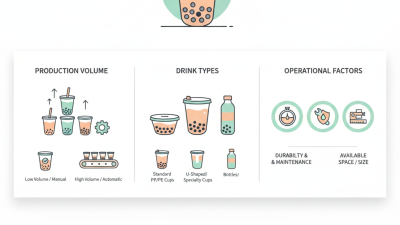
When selecting a boba tea sealing machine, consider several key factors. The machine's sealing speed is crucial. A faster machine helps keep up during peak hours. Look for models that can seal multiple cups simultaneously. This will improve efficiency and reduce wait times for customers. However, balancing speed with quality is important. A fast machine that compromises seal integrity can lead to messy spills and customer dissatisfaction.
Another critical aspect is the size and footprint of the machine. Assess your workspace before making a choice. A compact model may fit smaller cafes better, while larger venues may accommodate more substantial equipment. Careful consideration of space can prevent future inconveniences. Additionally, evaluate the machine's ease of use. Operators should be able to seal cups quickly without extensive training. Complexity in operation can lead to errors and wasted product.
Durability and maintenance are also worth noting. Machines in high-traffic environments need to withstand daily wear and tear. Look for features like easy-clean designs and accessible parts for repairs. Keep in mind that a reliable machine saves costs over time. Reflect on the necessity of a warranty as well. It can provide peace of mind regarding any unforeseen issues. Choosing the right boba tea sealing machine requires careful thought and research.
Understanding Different Types of Boba Tea Sealing Machines Available
When selecting the right boba tea sealing machine, it's crucial to understand the various types available in the market. Sealing machines come in manual, semi-automatic, and fully automatic models. Each type caters to different business needs and production capacities. Manual machines are ideal for small shops. They offer control but require more labor. Semi-automatic and fully automatic machines increase efficiency and are suited for larger establishments. In fact, a report by IBISWorld indicates that the bubble tea market will grow at an annual rate of over 10% in the coming years.
Different machines offer unique sealing techniques, which can influence the drink's freshness and customer experience. Induction sealing is gaining popularity due to its capability to create airtight seals, preserving flavor and quality. Another technique, heat sealing, provides reliable closures, though it may be less effective against environmental factors. According to a study by Technavio, nearly 30% of consumers prefer sealed boba because it enhances the drink's longevity.
Choosing a machine should also involve consideration of maintenance and ease of use. A complex machine may lead to disruptions in service. Conversely, a simpler design might limit scalability—this is an area many businesses overlook. Assessing your volume needs against machine capabilities requires honest evaluation. Ensure the equipment aligns with your business model for optimal output.
How to Choose the Best Boba Tea Sealing Machine for Your Business?
| Machine Type |
Sealing Method |
Capacity (Cups/Hour) |
Price Range (USD) |
Best For |
| Manual Sealing Machine |
Heat Sealing |
200 |
$200 - $400 |
Small Shops |
| Semi-Automatic Sealing Machine |
Heat Sealing |
300 |
$400 - $800 |
Medium Volume Businesses |
| Fully Automatic Sealing Machine |
Heat Sealing |
500+ |
$800 - $1500 |
High Volume Businesses |
| Cup Sealer for Drinks |
Cold Sealing |
250 |
$300 - $600 |
Cold Drinks |
| Vacuum Sealing Machine |
Vacuum Sealing |
150 |
$500 - $1000 |
Food Preservation |
Evaluating Production Capacity and Speed for Your Business Needs
When selecting a boba tea sealing machine, production capacity and speed are critical factors. Your business needs may vary based on anticipated customer volume. A machine with higher capacity can seal more cups per hour, which is essential during peak hours. Consider how many cups you expect to serve daily. This will help you find a model that meets your needs without overspending on unnecessary features.
Speed is just as important as capacity. A slower machine might lead to long wait times, which can frustrate customers. If you operate in a busy area, efficiency should be a priority. However, balance speed with accuracy. Faster sealing machines can sometimes compromise quality, leading to spillage or leaks. Conduct thorough research to find a reliable machine that meets both speed and quality standards.
Understanding your production needs can be complex. Assessing your customer flow and peak times will help you make an informed choice. You might need to reevaluate how much volume you truly require. Sometimes, businesses overestimate their needs, leading to underutilized equipment. This highlights the importance of careful planning in the buying process.
Production Capacity and Speed of Boba Tea Sealing Machines
This bar chart illustrates the production speed in cups per hour for different capacities of boba tea sealing machines. Businesses can evaluate which machine meets their production needs based on the capacity they require.
Analyzing Cost-Effectiveness and Return on Investment
Choosing the right boba tea sealing machine is crucial for cost-effectiveness and maximizing return on investment. A reliable machine can significantly reduce costs through minimized sealing errors. Sealing mistakes often lead to product waste, impacting your bottom line. Evaluating the overall cost of the machine, including maintenance, can provide insights into long-term savings.
When considering a machine, analyze its production capacity. A higher output may initially seem costly, but it can lead to increased sales. If your business sees a high volume of customers, then investing in a faster machine is worth the expense. Packaging efficiency should not be overlooked; a well-sealed cup enhances customer satisfaction. Happy customers tend to return.
It’s also important to consider the machine's versatility. Can it handle various cup sizes? A flexible sealing machine may require a higher upfront investment, yet it can adapt as your menu grows. Be wary of limits, as this may lead to the need for additional equipment later. Maintaining an open dialogue with suppliers can lead to better insights on long-term benefits. Understanding these dynamics can aid in making a sound decision.
Assessing Maintenance Requirements and Durability of Machines
When choosing a boba tea sealing machine, maintenance requirements and durability are critical factors. According to a recent industry report, up to 30% of machines fail within the first year due to improper maintenance. Regular checks on seals, heating elements, and electronic components can extend a machine's lifespan significantly. Investing time in routine maintenance can save costs in the long term.
Durability is another key consideration. Machines made from high-quality materials typically last longer. Reports indicate that machines using stainless steel parts exhibit fewer breakdowns. On average, a well-built sealing machine can perform efficiently for three to five years, depending on usage. Understanding the machine's load capacity and daily operational hours can help in making a more informed decision.
Lastly, ask questions about the reliability of the machine from other users. Experiences from peers can reveal common issues that may not be listed in a product brochure. A machine that seems ideal on paper may not hold up under real working conditions. Reflecting on such testimonials can guide you in assessing whether a sealing machine fits your business needs effectively.