Essential Tips for Choosing the Right Liquid Filling Machine?
In the competitive landscape of packaging, choosing the right Liquid Filling Machine is crucial. Industry expert John Smith notes, "Investing in the right equipment can elevate production efficiency." His insight highlights the importance of making informed choices.
Liquid filling machines vary greatly in features and capabilities. Knowing how to select one can save time and money. Factors include filling speed, accuracy, and compatibility with your product. Many companies overlook these aspects, leading to operational challenges.
Investing time in research can yield significant benefits. A suitable Liquid Filling Machine not only enhances productivity but also minimizes waste. However, some businesses fail to address their unique needs before making a purchase. Balancing costs and quality is often difficult but necessary for long-term success.
Understanding Different Types of Liquid Filling Machines
When selecting a liquid filling machine, understanding the various types is crucial. Primarily, machines fall into categories such as gravity fillers, pressure fillers, and vacuum fillers. Each type suits different liquid viscosities and production requirements. For instance, gravity fillers are effective for thin liquids, while pressure fillers work well for thicker products. This knowledge can drastically impact your production efficiency.
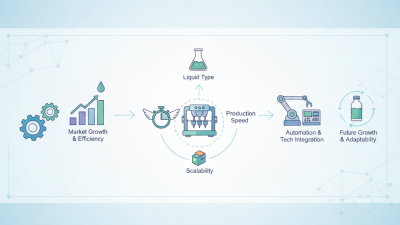
Recent industry reports indicate that the global liquid filling machine market is projected to grow at a CAGR of 4.8% between 2021 and 2026. This growth signifies the rising demand for automation in packaging. A machine's capability to handle a range of products can be an asset. However, not every machine will meet specific needs. Some may excel in speed but compromise precision. Others might offer accuracy but fall short in efficiency.
Furthermore, one must consider the machine's adaptability to different container sizes. Many machines can handle a variety of bottle shapes, but not all accommodate the same speed. This can lead to downtime during product changeovers. Understanding your operational requirements will help navigate these complexities. Being deliberate in these choices can prevent costly delays and ensure a smoother production process.
Assessing Production Volume and Speed Requirements
When selecting a liquid filling machine, understanding your
production volume and speed requirements is crucial. A machine that doesn’t meet your needs can lead to inefficiencies. Assess how many units you plan to fill per hour. If production demands are high,
consider machines with faster filling speeds. However, faster isn't always better. Speed can impact accuracy and product integrity.
When evaluating filling speeds, think about your product type and viscosity. Thicker liquids might require slower speeds for precision. An imbalance can result in spills or inaccurate fills. This reflects on your overall production and brand reputation.
Here are some tips to guide your decision-making. Analyze current production rates. This helps pinpoint the right machine. Don’t overlook maintenance needs. A machine that breaks down often can disrupt operations. Finally, consult with experts or peers. Gaining insights from their experiences can be invaluable.
Making an informed choice will reflect in the efficiency of your production line.
Evaluating Accuracy and Precision in Filling Processes
When selecting a liquid filling machine, accuracy and precision are key factors. You want a machine that dispenses the exact liquid volume required. Inconsistent fill levels can lead to waste and customer dissatisfaction. A machine that overfills wastes resources, while one that underfills risks product loss and regulatory issues.
Evaluate the machine’s filling mechanism. Different technologies exist, such as volumetric and gravimetric filling. Each has its advantages and drawbacks. Volumetric filling provides faster operation but can be less accurate with thicker liquids. Gravimetric filling is slower but offers enhanced precision, ideal for high-value products.
Consider the calibration process. A filling machine should allow for easy adjustments. Regular calibration checks can help ensure the machine dispenses accurately. Observing initial fill tests can also reveal the machine’s effectiveness. Note any discrepancies and analyze potential causes. A well-calibrated machine minimizes errors, enhancing overall efficiency and product quality.
Essential Tips for Choosing the Right Liquid Filling Machine
| Feature |
Description |
Importance |
| Filling Accuracy |
Measures how close the filled volume is to the target volume. |
High accuracy is crucial to avoid product loss and maintain standards. |
| Filling Precision |
Indicates the consistency of filling across multiple cycles. |
Ensures uniformity in product packaging, vital for branding and customer satisfaction. |
| Type of Liquid |
Refers to the viscosity and characteristics of the liquid being filled. |
Different liquids may require specific filling machine types for optimal performance. |
| Production Rate |
The amount of product filled per hour. |
Necessary for meeting production demands and deadlines efficiently. |
| Ease of Cleaning |
How simple it is to clean and maintain the machine. |
Important for ensuring hygiene standards, especially in food and pharmaceutical industries. |
Considering Machine Compatibility with Container Types
When selecting a liquid filling machine, compatibility with container types is paramount. Different materials and shapes require specific filling systems. For example, glass bottles demand gentle handling to avoid breakage. Plastic containers can withstand higher speeds but may need precision in fill levels. According to a 2022 industry report by Freedonia, over 65% of manufacturers emphasize aligning filling machines with container specifications to maximize efficiency.
Filling machines must also accommodate container shapes like pumps, sprayers, and droppers. Each design influences the type of filling technology needed. Some machines excel in volumetric filling, while others are suited for net weight filling. A misalignment can lead to wasted time and product. An industry analysis highlights that 30% of manufacturers experienced difficulties due to incompatible filling machinery, causing delays and increased operational costs.
Investing in a machine that fits your specific containers isn’t just a choice; it’s a necessity. Often, companies overlook this critical aspect. This can lead to subpar performance. Reviewing your containers' designs and materials is essential before making a choice. Conducting thorough research can mitigate potential issues and enhance productivity.
Essential Tips for Choosing the Right Liquid Filling Machine
Budgeting for Purchase and Maintenance of Filling Equipment
When budgeting for a liquid filling machine, consider both the purchase price and ongoing maintenance costs. A high-quality machine may cost more initially, but it often guarantees better performance and reliability. This is crucial in food, beverage, or pharmaceutical industries. The reliability of your equipment impacts production efficiency and product quality.
Think about the long-term expenses involved. Regular maintenance is essential to prevent breakdowns and costly repairs. Some machines require specific parts or expert service, which can add to your budget. Always include a contingency fund in your estimates. Unforeseen issues can arise, leading to unexpected costs.
Research potential machine types thoroughly. Some might appear budget-friendly but could require more frequent repairs. This leads to hidden costs that can strain your finances. Reflect on the overall value each machine brings to your operation. Make sure to weigh initial savings against potential future expenses. Finding the right balance can save resources and enhance productivity.