10 Liquid Filling Machine Buying Tips for Global Buyers
Choosing a Liquid Filling Machine is not simply a matter of comparing prices or advertised speeds. The right equipment must suit the product, container, production volume, and daily operating conditions. A machine that handles water smoothly may struggle with syrup, oil, or lotion. Viscosity changes filling speed, nozzle choice, and cleaning needs. Small details matter: a 500-milliliter bottle, a narrow neck, or foam during filling can affect accuracy and uptime.
Global purchasing adds more questions. Voltage, controls, spare parts, shipping arrangements, and local technical support all deserve attention before an order is placed. Ask suppliers for clear specifications, sample test results, and references from applications similar to yours. If possible, test your actual product and containers—not just a standard sample. Details matter.
A polished brochure cannot prove that a machine will fit your line. Not always. Consider how operators will adjust settings, clean contact parts, and respond to a stopped nozzle on a busy shift. Also compare the total cost of ownership, including installation, consumables, maintenance, and expected service life. Some trade-offs are easy to miss when a quote focuses only on speed. This guide presents ten practical buying tips to help global buyers ask better questions, check claims, and choose equipment with fewer surprises. Use the list as a starting point, then verify each decision against your product and production goals.
Define Product, Package, Fill Range, and Required Line Capacity
Before comparing machines, define the liquid and its behavior. Water, syrup, and foaming detergent need different filling methods. Record viscosity, temperature, particles, and whether the product foams or drips. Smithers’ The Future of Global Packaging to 2028 estimates the global packaging market at about $1.05 trillion in 2023, reflecting the wide range of formats buyers must accommodate. A market estimate is not a machine specification, though. Test the actual product whenever possible.
Specify the container material, shape, opening, and closure, then list every planned size. A 100 mL bottle and a 5 L jug can require different nozzles, handling, and changeover procedures. Set the minimum and maximum fill volume, plus the acceptable accuracy for each. “About one litre” is not enough. Ask for trials using your own containers; small necks, flexible pouches, or foamy liquids can expose problems that a brochure misses.
Capacity should mean saleable output, not just the filler’s fastest cycle. For example, 60 bottles per minute at 500 mL equals a theoretical 30 litres per minute. Add time for stops, cleaning, and changeovers before setting the required line rate. PMMI’s 2023 State of the Industry reporting tracks ongoing investment in packaging automation, but automation cannot fix a mismatched specification. I would challenge the target rate twice. Real production rarely runs perfectly.
10 Liquid Filling Machine Buying Tips for Global Buyers
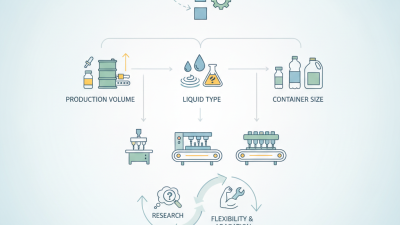
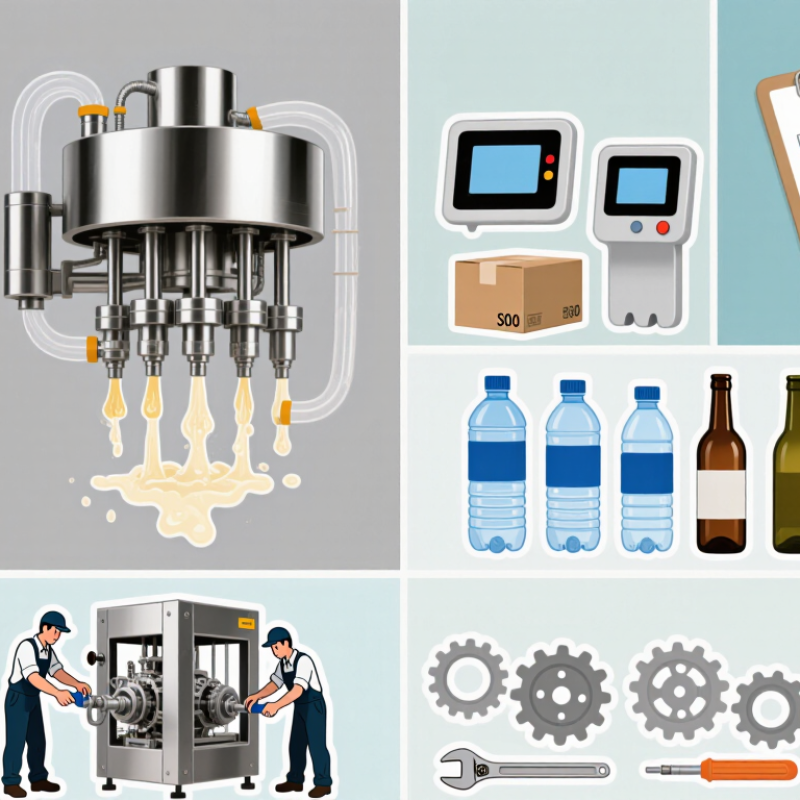
Define the product, package, fill range, and required line capacity before comparing machines.
The ranges shown are representative planning examples, not universal packaging standards. Confirm the actual minimum and maximum fill volumes with your product and container. Then size line capacity from good units required ÷ planned production minutes; for example, 12,000 bottles in 360 minutes at 75% operating efficiency requires about 44 bottles per minute of rated capacity.
Choose Filling Technology and Verify Accuracy with Factory Acceptance Tests
Liquid filler selection starts with product behavior, not advertised speed. Thin liquids may suit timed or gravity filling, while viscous products often need piston or gear-pump systems. Foaming, particulates, temperature, and container shape can change the result. Ask the supplier to test your actual product. Small details matter.
A 2021 Deloitte and Manufacturing Institute study projected that 2.1 million U.S. manufacturing jobs could remain unfilled by 2030. That is not a filling-machine forecast, but it highlights the value of repeatable controls and simple changeovers. Specify recipe storage, adjustment limits, and operator training alongside target speed. OIML R 61 provides internationally recognized test methods for automatic gravimetric filling instruments; use its principles when weighing test fills.
Factory acceptance tests should use agreed product, containers, and acceptance limits. Test at low, nominal, and high operating speeds, including realistic temperature or viscosity variation. Record each nozzle’s fill weight or volume, mean, spread, cycle rate, and rejected containers. Define the sample size before testing; a convenient handful can hide drift. Also check startup fills, after-changeover performance, and product giveaway. Keep the raw results, scale calibration evidence, and test conditions in the acceptance record. A factory pass still needs confirmation after installation, when utilities and line handling may differ.
Check Food-Safety Requirements: 21 CFR Part 117 and EU Regulation 1935/2004
When comparing liquid filling machines, treat food-contact compliance as a design question, not a folder of certificates. In the United States, 21 CFR Part 117 covers current good manufacturing practices and preventive controls for human food. Ask how the machine’s product-contact surfaces support hygienic operation, cleaning, and maintenance. Inspect the filler nozzle, seals, hoses, and tank outlet; narrow gaps can trap residue. Small details matter. Request material specifications and records showing which parts contact your product. A machine handling acidic juice may need different material checks from one filling neutral water.
For EU sales, Regulation (EC) No 1935/2004 sets general requirements for materials intended to contact food. They must not transfer substances in amounts that could endanger health or unacceptably alter food composition, taste, or smell. Ask for applicable declarations and traceability documents for contact materials, and confirm whether additional material-specific rules apply. Check that cleaning agents, operating temperatures, and product acidity match the supplier’s stated limits. Paperwork is useful, but it does not prove every installed seal is suitable. Verify part numbers against the documents, and keep replacement records. Requirements can depend on the material and use; I would not assume one certificate covers every configuration.
Assess Machine Safety Against ISO 12100 and Electrical Rules in IEC 60204-1
A liquid filler should be assessed as a machine system, not just a set of nozzles and pumps.
ISO 12100:2010 provides a framework for identifying hazards, estimating risk, and reducing it through design and safeguards. Ask the supplier for the risk assessment covering moving conveyors, capping heads, pinch points, and cleaning access. Then inspect the actual layout. Can an operator reach a moving part while clearing a jam? Is a guard easy to remove without tools? Small details matter.
Electrical checks deserve equal attention. IEC 60204-1 addresses machinery electrical equipment, including protective bonding, circuit protection, and disconnecting devices. Confirm that the control cabinet suits the washdown environment, and that wiring, emergency stops, and isolation points are clearly identified. Wet floors change the risk. So does frequent cleaning.
The ILO’s 2023 report, A Call for Safer and Healthier Working Environments, estimates nearly 3 million work-related deaths and 395 million non-fatal work injuries worldwide each year.
These figures are not specific to filling machines, but they underline why safety evidence belongs in procurement. Request test records and manuals, then verify safeguards during a factory acceptance test. No checklist catches every awkward cleaning task. I would still walk through one with the operators.
Compare Service Costs and Prepare for EU Machinery Regulation 2023/1230 on 20 January 2027
10 Liquid Filling Machine Buying Tips for Global Buyers
When comparing liquid filling machines, compare service costs over five years, not just the purchase quote. Request written rates for technician travel, remote support, spare parts, software updates, and response times. Price a realistic failure scenario: a worn pump seal, a blocked nozzle, and one production shift lost. McKinsey’s 2017 manufacturing analysis estimated predictive maintenance could reduce machine downtime by 30–50%. That is a potential, not a supplier guarantee. Ask what monitoring, training, and maintenance work your team must provide to achieve it.
For equipment intended for the EU market, check compliance before signing. Regulation (EU) 2023/1230 applies from 20 January 2027 and replaces the Machinery Directive. Ask the manufacturer to confirm how the machine’s risk assessment, technical documentation, instructions, and conformity assessment will meet the regulation. Check that operating instructions are available in the required language for your market, and identify who handles importer obligations. A CE mark alone is not the full evidence package. Keep the written answers.
Make service terms measurable. Specify response windows, parts availability, and costs outside warranty. Confirm whether remote diagnostics require a secure connection and who can access production data. Small gaps matter. A low annual service fee can become expensive when travel, commissioning, or urgent parts are excluded. Recheck the contract against your plant’s actual staffing and cleaning schedule; buyers sometimes overlook those details.