How to Choose the Best Liquid Filling Machine for Your Business?
Choosing the right Liquid Filling Machine can transform your production line. It impacts efficiency and product quality. Many options exist, but not all are suitable for your unique needs. Selecting wisely is crucial for success.
To make an informed decision, consider key factors. The type of liquid, viscosity, and packaging size matter significantly. A machine that works for one product might not work for another. Understanding your specific requirements will guide you.
Moreover, investing in a high-quality Liquid Filling Machine might come with a higher upfront cost. However, it often pays off in the long run through enhanced reliability and reduced waste. Think about your production goals and choose a machine that aligns with them.
Understanding Different Types of Liquid Filling Machines Available
When selecting a liquid filling machine, it's essential to understand the available types. Common categories include gravity fillers, pump fillers, and pressure fillers.
Gravity fillers use the weight of the liquid for accurate filling. They are ideal for thin liquids. However, they may struggle with thicker substances. Pump fillers are versatile and can handle various viscosities. They provide consistent filling but might be more complex to maintain. Pressure fillers are best for high-speed production. They use air pressure to fill containers quickly.
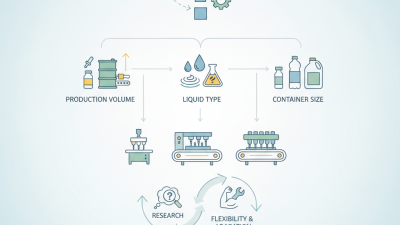
Tips for choosing the right machine: Assess your production volume. This affects the type of machine needed. Consider your liquid's viscosity. Different fillers suit different liquids. Also, think about the size of your containers. Some machines can adjust for various sizes, while others cannot.
Look for a machine that offers flexibility. Changing your product line may require different filling options. It's useful to invest in a machine that adapts. Don't overlook the importance of maintenance. A machine that is challenging to clean can lead to issues. Regular maintenance ensures better performance.
Evaluating the Key Features of Liquid Filling Machines
When evaluating liquid filling machines for your business, key features play a vital role. Start by considering the filling accuracy. A high degree of precision ensures consistency across your product line. This aspect is crucial for maintaining quality and meeting customer expectations.
Next, assess the machine's versatility. Can it handle various liquid types? This capability is essential, especially if your product range includes different densities or viscosities. A machine that adapts to your needs can save time and costs as your business evolves.
Additionally, look at the ease of operation. Machines with intuitive interfaces help reduce training time for staff. This factor can enhance productivity but may not always reflect in high-end machines. Always prioritize user experience. Consider maintenance requirements as well. Regular upkeep can affect your operational efficiency, highlighting the importance of a machine that balances performance with reliability. Identify areas where your choice might fall short and address them decisively.
Assessing the Production Capacity and Speed Requirements
When choosing a liquid filling machine, assessing your production capacity and speed requirements is crucial. According to industry reports, bottling lines can fill between 100 to 700 bottles per minute, depending on the machine type. For small-scale operations, a machine with a capacity of 100-200 BPM may suffice. However, larger manufacturers often require systems that achieve speeds of over 500 BPM. Understanding your business’s volume is essential in selecting an appropriate machine.
Speed alone isn't enough to ensure efficiency. Variability in product viscosity and container size must also be considered. For example, filling thicker liquids generally slows down the process. A study from the Packaging Machinery Manufacturers Institute (PMMI) highlights that businesses can lose up to 10% in profits due to bottlenecks in filling operations. It's critical to align machine capabilities with both product characteristics and market demands.
Be aware of potential trade-offs. High-speed machines often come with increased complexity and higher maintenance requirements. Choosing a dependable machine sometimes means sacrificing speed for reliability. Finding that balance is key for sustained production. Overall, a thorough assessment of speed and capacity will help in making informed decisions for your liquid filling needs.
Considering Compatibility with Various Liquid Types and Packaging
Choosing the right liquid filling machine involves careful consideration of the liquids you plan to package. Different products have distinct properties. For example, viscous liquids like sauces require specific machinery that can handle their thickness. Conversely, thin liquids, such as water or juice, might need machines that are faster and more fluid. Understanding the nature of your liquids is crucial for optimal performance.
Compatibility extends beyond just viscosity. The chemical makeup of a liquid can impact the choice of machinery. For instance, acidic or corrosive liquids may demand materials that resist corrosion. Ignoring this can lead to equipment damage and product contamination. Additionally, consider the packaging types you wish to use. Some machines are better suited for bottles, while others work well with pouches or cartons. Finding a machine that accommodates all your needs can be challenging.
When selecting, assess not only product compatibility but also production volume. A small operation might settle for a manual machine. Larger businesses require fully automated systems for efficiency. Your choice should reflect the scale of your production, ensuring reliability without overspending. It's a balancing act that requires you to weigh many variables.
Analyzing Budget Considerations and Total Cost of Ownership
When choosing a liquid filling machine, budget considerations play a crucial role. Understand the initial cost, but don’t forget the total cost of ownership. This includes maintenance, spare parts, and energy consumption over the machine's lifetime. A seemingly cheap machine may result in higher long-term expenses due to frequent breaks or inefficiencies.
Evaluate your production needs and throughput. A machine that fills at a slower rate may save upfront costs, but could hamper your operations. Look into the reliability of the machine. Research feedback from other users to gauge real-world performance.
Consider the flexibility of the machine. If your product line changes often, a multifaceted machine may be worth the investment. Balance quality and cost. Sometimes, paying a bit more upfront leads to better efficiency and lower costs in the long run. It's essential to reflect on the decision-making process to ensure it aligns with your business goals.