China’s food-processing sector has become a major source of packaging equipment for global buyers. Among its diverse offerings, the Food Sealer Machine supports freshness, hygiene, transport stability, and longer shelf life. Demand is rising as prepared meals, frozen foods, meat products, and e-commerce deliveries expand.
Industry reports provide useful context. PMMI’s packaging machinery research highlights continued investment in automation, flexible production, and labor-saving equipment. Fortune Business Insights also identifies food safety, convenience, and packaged-food consumption as important growth drivers in the global food packaging market. These trends help explain why Chinese manufacturers are improving sealing speed, temperature control, vacuum performance, and digital monitoring.
However, market size alone does not prove manufacturing quality. It can mislead buyers.
A reliable supplier should demonstrate repeatable seal strength, stable performance across film types, and documented quality procedures. Buyers should also examine stainless-steel construction, electrical safety, cleaning access, spare-parts availability, and technical support. For export projects, certifications and compliance documents should match the destination market, not merely appear in a brochure.
This guide reviews ten leading Chinese manufacturers from a practical sourcing perspective. It considers product range, production experience, customization capability, factory credibility, and after-sales service. Actual performance may vary by model and application. That point deserves attention.
A compact tabletop unit may suit a small food workshop, while a continuous band sealer or vacuum chamber machine may better serve industrial production. Sample testing remains essential. So does checking real customer feedback, warranty terms, and installation support before signing a purchase agreement.
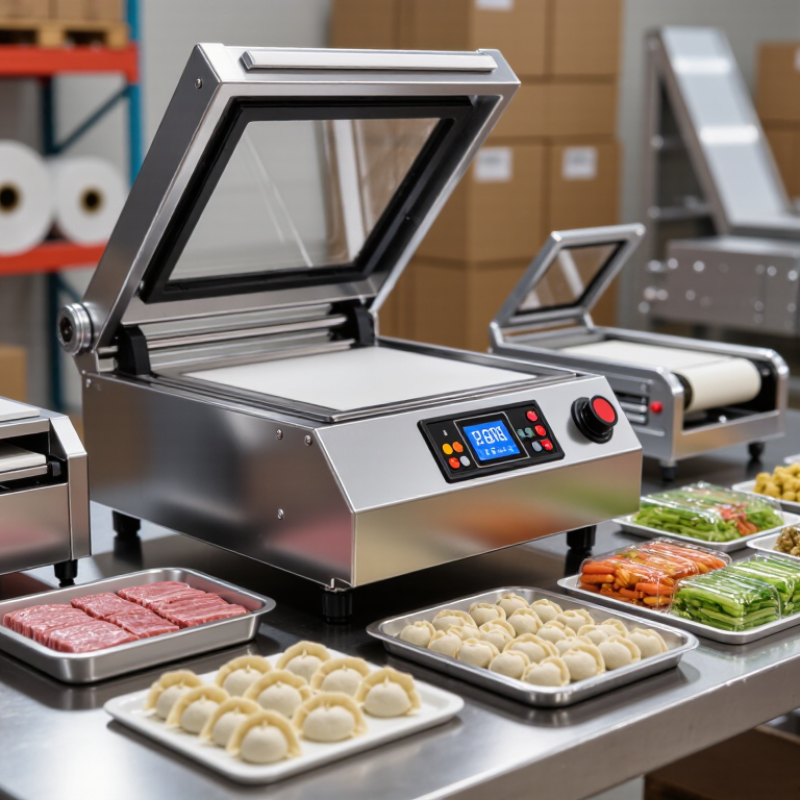
This guide defines a food sealer manufacturer as a company that designs or produces equipment for sealing food packages. The scope includes vacuum chamber machines, tray sealers, and continuous band sealers. It excludes general packaging firms unless they make food-sealing equipment. A meaningful top-ten comparison should assess product range, sealing speed, materials handled, service support, and verifiable production records—not advertising claims alone.
For market context, Grand View Research valued the global food packaging market at USD 456.3 billion in 2023 and forecast a 5.7% compound annual growth rate from 2024 to 2030. FAO reported that 13.2% of food was lost between harvest and retail in 2021. These figures help explain preservation needs, but they do not measure Chinese sealer sales. For 2024 comparisons, shipment figures and factory capacity should be checked against dated company records; public data may be incomplete. That is a real limitation.
Tips: Ask for a sealing test using your actual pouch film and food. Check seal width, leakage results, and cycle time. A neat sample seal is useful, but one test is not enough. Request repeat runs and service details before ranking suppliers.
A credible ranking of China’s food sealer machine manufacturers should begin with verified production capacity, not impressive claims alone. Output figures can indicate whether a factory handles repeat orders, but they need context. Ask how capacity is measured, and whether it reflects completed machines or theoretical line speed. A factory tour, production records, and inspection of assembly areas can make the difference clearer. Numbers need evidence.
Export share offers another useful signal. A substantial overseas customer base may suggest experience with varied packaging formats and service expectations. Still, export volume alone does not prove reliability. Buyers should check shipment records, destination markets, spare-parts support, and references from comparable users. One weakness: public export data can be incomplete, so rankings should avoid false precision.
Quality and product compliance deserve equal weight. Confirm that an ISO 9001 certificate is valid and covers the relevant manufacturing site and activities. Check CE documentation against the machine model and its intended use; a logo by itself proves little. For food-grade compliance, inspect material declarations for product-contact surfaces, such as sealing bars, conveyor belts, and hoppers. Stainless steel may look reassuring, but grade, finish, and cleaning design matter too. Request traceable documents and sample records. Then examine a working machine: seals should be even, controls clear, and surfaces accessible for cleaning. These checks are not perfect, and a checklist cannot replace careful technical review.
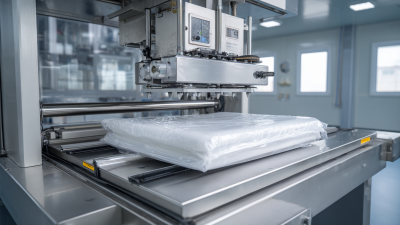
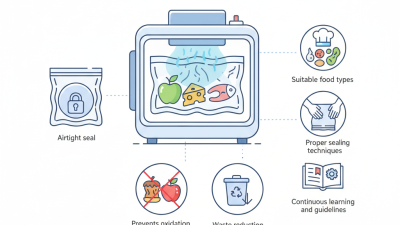
China’s food-sealer manufacturers serve very different production needs. Their machines range from tabletop impulse sealers for small workshops to continuous band sealers for steady pouch output. Vacuum models remove air before sealing; chamber machines suit liquids and moist foods better than external-suction units. Some suppliers also build tray sealers, shrink-sealing lines, or modified-atmosphere systems. Each method solves a different packaging problem.
Capacity figures need context. A stated output per minute may assume one pouch size, trained operators, and uninterrupted feeding. Ask manufacturers to test your actual film, product, and package dimensions. Watch the seal edge closely. It should be even, clean, and free of wrinkles. Small defects matter.
Across the top ten profiles, core markets commonly include snacks, tea, frozen foods, meat, seafood, and prepared meals. Compact units often support small food businesses and sample rooms; automatic lines target larger processors with repeatable volumes. Stainless-steel construction and accessible cleaning points are practical advantages in wet production areas. Export-focused suppliers may offer different voltage options and manuals, but documentation quality varies. That deserves a careful review. A machine can look fast in a demonstration and still slow down when operators change film rolls or clean the sealing bar. Test the whole workflow, not just the advertised cycle rate.
This non-company-specific comparison summarizes representative operating ranges commonly found in Chinese food sealing machine product categories. Continuous band sealers generally provide the highest throughput, while vacuum chamber machines prioritize air removal and product protection. Actual capacity varies with bag size, product characteristics, sealing temperature, and automation level.
For China’s top 10 food sealer machine manufacturers, compare the working details behind the headline specifications. A vacuum rating of −0.08 MPa represents roughly 20 kPa absolute pressure at sea level, but actual results depend on altitude, pump condition, and product moisture. Ask suppliers how they measure vacuum and whether the figure is a peak reading or a stable operating level. A gauge can look impressive. The package may tell a different story.
Seal lengths of 20–60 cm cover small pouches through wider bags, yet length alone does not confirm seal quality. ASTM F88/F88M measures flexible-package seal strength; sample seals under consistent settings before comparing machines. Throughput needs similar care: request cycles per minute using a stated bag size, material, and vacuum target. Larger bags usually take longer to evacuate. Real production also includes loading and unloading, which brochures may omit. PMMI’s 2024 State of the Industry report describes ongoing investment in automation and production efficiency across packaging operations, making usable output more relevant than a maximum cycle claim. One useful test: time a 30-minute run and record accepted packs, seal defects, and operator stops. It is not perfect, but it exposes gaps between lab figures and a busy packing line.
Anonymous comparison of common food-sealer machine configurations. Figures are indicative specification ranges for equipment classes, not verified quotations or specifications for named manufacturers.
| Equipment Profile | Machine Type | Typical Vacuum Level | Seal Length | Typical Throughput | Typical Use | Key Selection Consideration |
|---|---|---|---|---|---|---|
| Profile 1 | Manual external vacuum sealer | Up to approximately −0.08 MPa | 20–30 cm | Approximately 1–3 cycles/min | Small shops and occasional packing | Low purchase cost; operator-dependent output |
| Profile 2 | Double-seal external vacuum sealer | Up to approximately −0.08 MPa | 30–40 cm | Approximately 2–5 cycles/min | Small food businesses and dry goods | Check seal width, bag compatibility, and cooling time |
| Profile 3 | Single-chamber tabletop vacuum packer | Approximately −0.08 to −0.095 MPa | 30–40 cm | Approximately 2–4 cycles/min | Restaurants, delis, and pilot production | Chamber dimensions limit pouch size and product height |
| Profile 4 | Single-chamber floor-standing packer | Approximately −0.08 to −0.095 MPa | 40–50 cm | Approximately 3–6 cycles/min | Food processors with moderate daily volume | Compare pump capacity, chamber size, and duty cycle |
| Profile 5 | Double-chamber vacuum packer | Approximately −0.08 to −0.095 MPa | 40–50 cm | Approximately 4–8 cycles/min | Continuous batch packing | Alternating chambers can reduce operator idle time |
| Profile 6 | Large double-chamber packer | Approximately −0.08 to −0.095 MPa | 50–60 cm | Approximately 4–8 cycles/min | Large pouches and higher-volume processing | Confirm power supply, floor space, and pump maintenance needs |
| Profile 7 | Continuous band sealer | No vacuum; continuous heat sealing | 20–60 cm bag width range, model-dependent | Typically specified by belt speed, often 0–12 m/min | Sealing pre-filled bags on production lines | Not a vacuum packer; verify film type and bag thickness |
| Profile 8 | Vacuum-and-gas-flush chamber packer | Approximately −0.08 to −0.095 MPa before gas flush | 30–50 cm | Approximately 2–6 cycles/min | Products requiring modified-atmosphere packaging | Requires suitable gas supply and compatible packaging film |
| Profile 9 | Automatic belt-fed vacuum system | Approximately −0.08 to −0.095 MPa | 40–60 cm | Line-dependent; commonly rated by packs/min | Integrated, higher-volume production lines | Throughput depends on product loading and upstream equipment |
| Profile 10 | Automatic tray-sealing system | Vacuum or gas-flush capability is model-dependent | Seal area depends on tray tooling | Line-dependent; commonly rated by trays/min | Prepared meals, fresh foods, and retail trays | Confirm tray format, tooling cost, and changeover time |
Notes: Vacuum readings and cycle rates vary with pump capacity, chamber size, product, pouch, operating conditions, and test method. A stated vacuum level is not directly comparable across machines unless measurement conditions are consistent. Confirm current specifications with the equipment supplier before purchase.
A supplier audit should begin with the parts that touch food. Ask for material specifications, test reports, and traceability records for sealing bars, belts, and product-contact surfaces. Check that documents match your intended temperature, food type, and cleaning method. A certificate alone may not answer every question. Request photos or a live demonstration, and inspect seams, corners, and hard-to-clean gaps.
MOQ can vary by machine configuration, packaging size, and customization. Get the exact quantity and price in writing, including spare parts and packaging. Clarify warranty coverage, exclusions, response times, and who pays shipping for replacement components. Ask how technicians handle a failed heater or uneven seal. A practical test with your own packaging film can reveal issues that a polished factory video may miss. We learned that lesson late once.
Tips: Send a sample film roll and a short product specification before ordering. Record seal temperature, cycle time, and defect rate during trials. Keep communication clear, but allow room for misunderstandings; technical terms do not always translate neatly. After-sales support matters most when production stops.