Leave Your Message
Buying a Vacuum Packaging Machine is rarely a simple equipment decision. Product shape, moisture level, film structure, output targets, and workplace conditions all matter. A small butcher shop may need a compact chamber model, while a seafood processor may require a continuous belt system with stronger sealing control.
Packaging specialist Dr. K. L. Yam emphasizes that “packaging is a system, not merely a container.” That principle applies directly to vacuum packaging. Removing air is only one step. The machine must also protect seal integrity, maintain product presentation, reduce waste, and support consistent production. A weak seal can expose food to oxygen, moisture, or contamination. Small errors become expensive at scale.
This guide examines ten major types for global buyers. It covers chamber machines, external suction models, double-chamber units, thermoformers, tray sealers, belt systems, nozzle machines, and specialized industrial designs. Each type serves a different operating reality. Some prioritize flexibility. Others pursue speed.
There is no universal winner.
That is easy to forget.
A buyer should compare pump capacity, sealing width, material compatibility, cleaning access, controls, spare-part availability, and after-sales support. Regional voltage requirements also deserve attention. A machine that performs well in a showroom may struggle beside a wet processing line. Practical testing is essential. Ask suppliers for sample trials using the actual product, pouch, and production rhythm. The best Vacuum Packaging Machine is not always the fastest one. It is the model that delivers dependable seals, manageable maintenance, and measurable value over time.
Vacuum packaging removes air from a pouch, then seals it with controlled heat. The process helps reduce oxidation, moisture exposure, and package volume. In production trials, seal temperature, vacuum time, and film thickness often matter more than advertised speed. A clean, even seal is the real evidence.
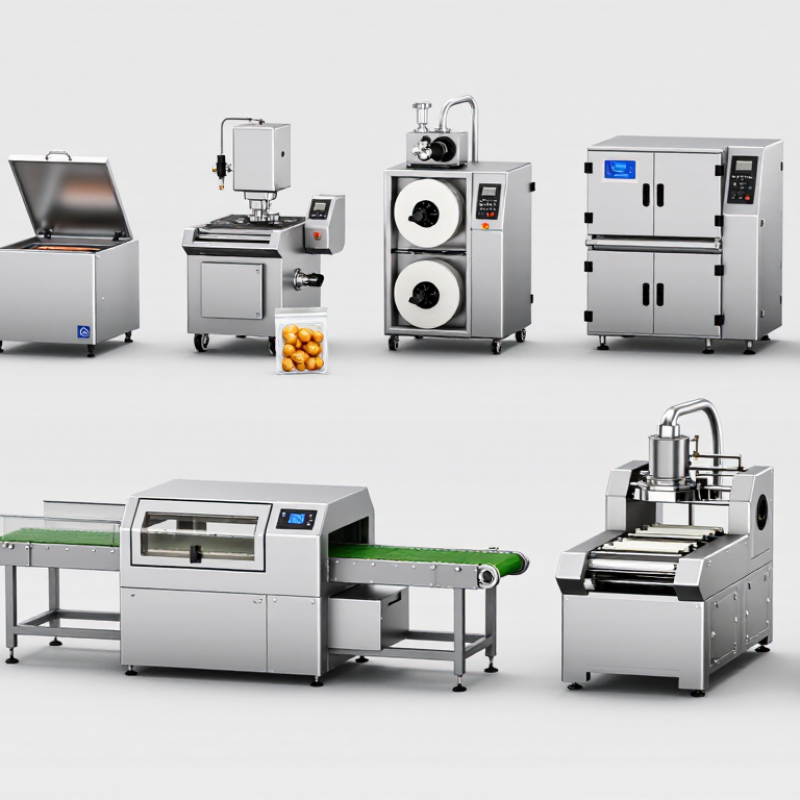
Buyers commonly classify machines by structure, automation, and product handling. The main types include external suction, single-chamber, double-chamber, nozzle, belt, conveyor, rotary, tray-sealing, thermoforming, and skin packaging machines. External suction models suit small operations and modest volumes. Chamber machines handle liquid products more reliably. Double-chamber designs improve output because one chamber can load while the other seals. Nozzle systems work well with larger bags. Belt and conveyor models support continuous production. Rotary systems reduce labor on repetitive lines. Thermoforming machines create packages from rollstock, while tray and skin systems present products neatly. Classification should also consider pump capacity, sealing length, material compatibility, cleaning access, and service support.
Tips: Test your actual product, not an empty bag. Place soup, sharp edges, or warm items in sample packs. Watch for liquid pullback, wrinkles, weak corners, and seal contamination. A machine that looks efficient may become difficult to clean. I have seen buyers focus on cycle time and overlook changeover delays. That judgment is understandable, but incomplete. Ask for measured results, maintenance records, and operator training details before selecting equipment.
Comparison based on machine structure, packaging method, product format, vacuum capability, sealing configuration, production scale, and typical applications.
| Rank | Machine Type | Basic Operating Principle | Typical Vacuum Capability | Typical Sealing Configuration | Common Output Range | Best-Suited Package Formats | Typical Applications | Main Advantages | Important Limitations | Key Buying Criteria |
|---|---|---|---|---|---|---|---|---|---|---|
| 1 | Single-Chamber Vacuum Packaging Machine | The product and pouch are placed inside a chamber. Air is removed from the chamber and pouch, after which the pouch is heat-sealed. | Usually up to approximately 99% air removal, depending on product, pump capacity, and pouch design. | One or two straight sealing bars; common bar lengths are 300–600 mm. | Approximately 2–6 cycles per minute, depending on pouch size and vacuum time. | Flat pouches, pre-made barrier bags, small trays, and irregular products. | Retail foodRestaurantsSmall processors | Compact footprint, flexible operation, good vacuum quality, and relatively low investment. | Only one chamber operates at a time; the operator must open and close the lid for every cycle. | Chamber dimensions, pump displacement, sealing-bar length, seal width, material compatibility, and electrical standard. |
| 2 | Double-Chamber Vacuum Packaging Machine | Two chambers share a central lid or operating system, allowing one chamber to be loaded while the other is evacuating and sealing. | Usually up to approximately 99% air removal with a suitable vacuum pump and correctly selected barrier film. | Two independent sealing areas; common seal lengths are 400–1,000 mm per chamber. | Approximately 4–12 cycles per minute, depending on chamber size and product characteristics. | Pre-made pouches, bulk food bags, meat cuts, seafood, and industrial components. | Medium productionMeat processingIndustrial parts | Higher productivity than a single-chamber model and better operator utilization. | Larger floor space, higher power demand, and more complex maintenance than single-chamber equipment. | Chamber volume, pump capacity, seal-bar layout, cycle time, cleaning access, and optional gas-flushing capability. |
| 3 | External-Suction Vacuum Sealer | The open end of a pouch is positioned outside the machine. A nozzle or suction channel removes air before the pouch is sealed. | Commonly achieves approximately 90–98% air removal, depending on pouch construction and product shape. | External heat-sealing bar, often 200–600 mm wide. | Approximately 3–10 pouches per minute for manual or semi-automatic operation. | Embossed channel bags, smooth bags with compatible nozzles, and small flexible pouches. | Household useRetail countersLight commercial use | Low cost, easy setup, small footprint, and convenient for occasional packaging. | Lower air-removal consistency for liquids, powders, sharp products, and highly irregular items; usually less suitable for heavy production. | Nozzle design, bag compatibility, seal-bar width, liquid-management features, duty cycle, and pump type. |
| 4 | Continuous-Band Vacuum Sealer | Packages move continuously through a conveyorized sealing head. Air is removed through a nozzle or external vacuum system before continuous sealing. | Typically approximately 90–98% air removal; actual performance depends strongly on the product and bag opening. | Continuous horizontal or vertical band seal, commonly 6–15 mm wide. | Approximately 10–30 bags per minute, depending on bag size and product feeding. | Flat pouches, gusseted bags, dry goods, powders, and products requiring repeated sealing. | Dry foodsPowdersMedium-speed lines | Continuous operation, integrated date coding options, and easy integration with conveyors and filling equipment. | Not ideal for large liquid volumes or products that require deep chamber evacuation; seal quality can be affected by contamination. | Conveyor speed, vertical or horizontal orientation, sealing temperature control, coding system, and product-feeding method. |
| 5 | Rotary Vacuum Chamber Machine | Multiple chambers or workstations rotate around a central axis, increasing loading and sealing frequency while maintaining chamber-based evacuation. | Usually up to approximately 99% air removal when paired with an appropriately sized vacuum pump. | Multiple sealing stations with single, double, or angled sealing bars. | Approximately 10–30 cycles per minute, depending on the number of stations and product size. | Pre-made pouches containing meat, seafood, cheese, vegetables, and other solid products. | High-throughput food processingLarge pouch production | High productivity, consistent vacuum and seal quality, and reduced idle time between loading cycles. | Higher capital cost, larger footprint, and more demanding cleaning and maintenance requirements. | Number of stations, chamber size, conveyor integration, sanitation design, pump capacity, and automatic loading options. |
| 6 | Automatic Belt-Type Chamber Vacuum Machine | Products in pouches are placed on a conveyor and automatically indexed into a chamber for vacuuming and sealing. | Usually up to approximately 99% air removal, depending on chamber design, pump size, and product characteristics. | One or more sealing bars, commonly configured for repeated pouch loading. | Approximately 15–40 pouches per minute for suitable product sizes and feeding conditions. | Pre-made pouches, large food packs, bulk portions, and products prepared on a production conveyor. | Industrial food linesAutomated packaging | Reduced manual handling, repeatable cycles, and straightforward connection to upstream and downstream conveyors. | Requires consistent pouch presentation and product positioning; automation increases setup and service complexity. | Conveyor layout, indexing accuracy, chamber clearance, line synchronization, sanitation features, and control-system compatibility. |
| 7 | Thermoform Vacuum Packaging Machine | A roll of bottom film is heated and formed into cavities. The product is loaded, air is removed, and a top web is sealed before packs are cut apart. | Typically up to approximately 99% air removal; vacuum and gas flushing may both be available. | Full-lid sealing across the formed web; pack width and pitch determine sealing area. | Approximately 10–30 cycles per minute, with multiple packs per cycle depending on format. | Rigid or semi-rigid formed trays, sliced products, portions, and skin or vacuum-skin formats. | Meat and poultryCheeseReady meals | Efficient film usage, high automation, attractive pack presentation, and multiple cavity formats. | High initial investment, format-change time, skilled setup requirements, and less flexibility for very small batches. | Film width, forming depth, mold-change system, material compatibility, cutting accuracy, output per cycle, and cleaning design. |
| 8 | Tray Vacuum and Modified-Atmosphere Packaging Machine | Pre-formed trays are filled, evacuated, optionally flushed with a selected gas mixture, and sealed with a lidding film. | Vacuum level varies by product; many systems combine partial vacuum with controlled gas flushing rather than maximum vacuum. | Heat-sealed lidding film around the tray flange; sealing tools are matched to tray dimensions. | Approximately 5–25 trays per minute, depending on the number of lanes and tooling. | Rigid trays made from common food-packaging plastics, board-based laminates, or other heat-sealable structures. | Fresh meatProducePrepared meals | Excellent retail presentation, controlled headspace, easy product identification, and compatibility with gas-flushing recipes. | Requires accurate tray and film matching; gas supply, tooling, and sealing-flange cleanliness are important. | Tray dimensions, sealing-tool format, gas system, residual oxygen target, film type, throughput, and easy-clean construction. |
| 9 | Vacuum Skin Packaging Machine | A heated top film conforms closely to the product and tray or support board under vacuum, creating a tight, display-oriented package. | Uses controlled vacuum to draw the film tightly around the product; the required level varies with product geometry and film behavior. | Perimeter seal around a tray or board, with the skin film closely following the product profile. | Approximately 3–15 packs per minute, depending on pack size, tooling, and heating requirements. | Rigid trays, board-backed packs, sliced products, fresh meat, seafood, and premium retail portions. | Fresh proteinsPremium retailExtended presentation life | Strong product visibility, reduced package movement, attractive presentation, and efficient use of display space. | Film and tray compatibility are critical; tooling, heating control, and product height can limit format flexibility. | Film shrink and barrier properties, maximum product height, tray material, heating profile, tool changeover, and seal integrity. |
| 10 | Vacuum Packaging Machine with Gas Flushing | The package is evacuated and then filled with a controlled gas mixture, such as nitrogen or carbon dioxide, before final sealing. | Often uses partial vacuum followed by gas replacement; performance is evaluated by residual oxygen and final headspace rather than vacuum level alone. | Chamber, tray, thermoform, or nozzle-based heat sealing, depending on the machine platform. | Approximately 5–40 packs per minute, depending on the selected machine type and gas-exchange cycle. | Flexible pouches, trays, thermoformed packs, and products sensitive to oxidation or crushing. | CoffeeSnack foodsFresh foods | Can reduce oxidation, protect delicate products, and support controlled package atmosphere and presentation. | Requires food-grade gas supply, recipe control, leak testing, and suitable barrier materials; gas selection must match the product. | Residual oxygen target, gas consumption, gas-mixing accuracy, leak rate, film barrier, product sensitivity, and regulatory requirements. |